
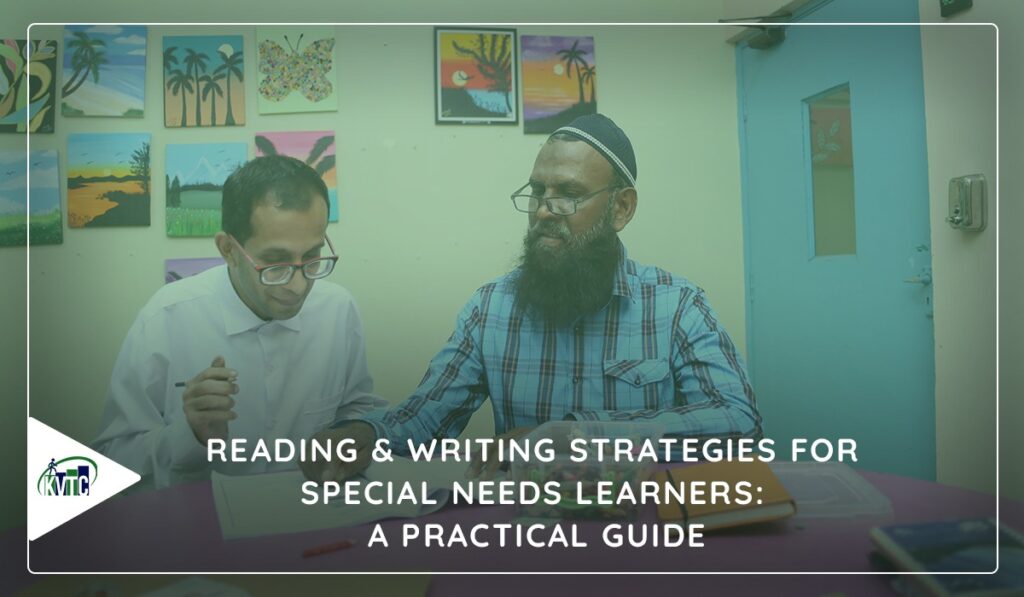
Reading and writing are important skills for every child. They help in school, daily life, and communication. For special needs learners, these skills may take more time to develop. Many require extra support and patient guidance.
In Pakistan the KVTC (Karachi Vocational Training Center) provides important support for learners with special needs. KVTC offers therapy, education and training that build confidence and independence.
This article provides easy-to-use strategies in preparing special needs learners to read and write.These are strategies that parents, teachers and caregivers can apply on a daily basis.
Why Reading and Writing Can Be Hard for Special Needs Learners
Every child learns differently. Some may face challenges such as:
- Trouble focusing on one task
- Difficulty remembering letters or words
- Weak hand control for writing
- Delayed language or speech skills
Understanding these challenges helps in choosing the right teaching method.
Reading Strategies for Special Needs Learners
1. Use Visual Aids
Pictures and flashcards help connect letters with objects. For example, “A” with an apple picture.
2. Break Lessons into Small Steps
Teach single words first. Later, move to short sentences. Step by step learning reduces stress.
3. Repeat Often
Daily repetition helps with memory. Practice words and sounds many times for better learning.
4. Teach Phonics
Show how sounds form words. For example, “C A T” makes “cat.”
5. Read Aloud Together
Read stories aloud. Let the child repeat lines. This improves speech and listening skills.
6. Use Technology
Educational apps and audio books make learning fun. Games and songs keep learners interested.
Writing Strategies for Special Needs Learners
1. Build Hand Strength
Fine motor skills are important for writing. Coloring or clay play strengthens hand muscles.
2. Start with Tracing
Tracing letters and shapes makes writing easier. Slowly, children can write without tracing.
3. Use Large Fonts
Big letters with bold outlines are easier to copy and understand.
4. Keep Practice Short
Short writing sessions work better than long tiring ones.
5. Practice Daily Life Writing
Ask children to write their name or simple notes. Real tasks make writing useful.
6. Praise Progress
Celebrate every attempt. Positive words encourage children to continue learning.
Role of Parents in Learning
Parents are key in helping special needs learners. They can:
- Provide a quiet place to study
- Read simple stories before bedtime
- Encourage writing during daily tasks
- Stay patient and supportive
- Work with teachers and therapists
At KVTC, parents take part in training. This keeps learning active both at school and at home.
Role of Teachers in Reading and Writing
Teachers play a major role as well in helping special needs learners develop reading and writing skills. Not all children study in the same manner.The teachers must have to be adaptable and innovative in approach.
A useful method is to combine sound, touch and sight. This makes learning clear and easy to remember. For example, a child can look at a letter, hear its sound and trace it at the same time. This builds better understanding and memory.
Teachers must also give extra time for reading and writing tasks. Some learners process information slowly and need more time to finish. Patience helps them work without stress or pressure.
Individual support is another key step.A child with an issue with letters might require a one-on-one teaching experience. Teachers are able to modify lessons according to the level and development of each child. Group learning is equally valuable. Working with classmates encourages communication and builds confidence. Learners often gain motivation when they see others trying.
Rewarding effort is very effective. Children can feel proud of small rewards such as stickers or stars. They also help them boost self-belief and remain motivated by encouragement and praise.
In KVTC (Karachi Vocational Training Center), teachers indicate individual learning plans to each learner.These plans match the needs of each child. With structured lessons and consistent care, teachers help learners grow step by step.
Importance of Therapy and Training
Therapy improves reading and writing growth.
- Speech therapy builds language and word skills
- Occupational therapy improves hand strength for writing
- Vocational training prepares children for real life tasks
KVTC combines therapy and education. This balance helps learners progress step by step.
Making Learning Fun
Children learn more when lessons are enjoyable. Some fun ideas are:
- Use colorful books with large pictures
- Play games that match letters and sounds
- Allow drawing before writing words
- Turn lessons into songs and rhymes
- Let children choose their own books
How KVTC Helps Special Needs Learners
KVTC (Karachi Vocational Training Center) is a trusted place for special needs learners in Pakistan. The center offers education, therapy, and training that support real progress. Every child is treated with care and respect.
KVTC provides education in reading and writing. Learners practice with visual aids and phonics. Lessons are given step by step. Teachers focus on each child and offer personal support.
The center also provides therapy for speech and motor skills.Speech therapy assists the children to develop language and communication. Occupation therapy develops the strength and coordination of the hands.These therapies support progress in reading and writing.
Another part of KVTC’s work is training for jobs and independence. Learners gain skills in crafts, computers, and daily life tasks. This training prepares them for future employment.
Families also receive help through support programs. Parents learn how to guide their children at home. They work together with teachers to keep learning active.
KVTC believes in focusing on ability rather than disability. With patience and encouragement, children can grow in education and skills. The center helps every learner take steps toward a brighter and more independent future.
Building Confidence in Special Needs Learners
Confidence is as important as skills. Parents and teachers can help by:
- Praising every small success
- Setting simple and clear goals
- Encouraging teamwork with classmates
- Allowing creative expression through art or music
Confidence gives children strength to keep learning and trying.
Conclusion
Reading and writing are keys to independence. For special needs learners progress may be slow but possible.
With repetition and visual aids learning becomes easier. Short lessons also help children stay focused. Parents and teachers must work together with therapists for better results.
KVTC proves that every child can grow. With love and patience special needs learners can achieve success in reading and writing.
——————————————————————————————————————————————————
FAQs
-
1. What is assistive technology in special education?
Assistive technology (AT) includes tools like speech devices and reading pens that help students with disabilities learn, communicate, and gain independence effectively.
-
2. How does assistive technology benefit students?
AT boosts learning, enhances communication, promotes independence, and builds confidence, enabling students with special needs to thrive in inclusive classrooms.
-
3. What types of assistive technology are available?
From text-to-speech software and adaptive keyboards to noise-canceling headphones and vocational tools, AT caters to diverse needs, supporting learning and daily tasks.
-
4. How does KVTC use assistive technology?
KVTC empowers students with tools like interactive boards, adaptive devices for IT and cooking, and personalized plans, fostering education and job-ready skills.