
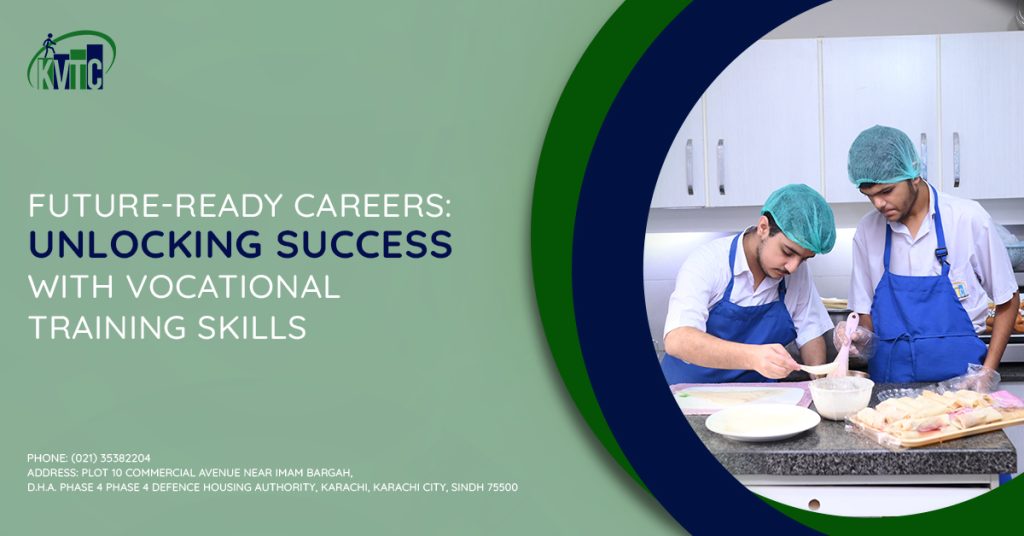
In today’s fast-paced world, getting employment is a hard thing for even a capable person. And the scenario is very heartbreaking for intellectually challenged persons. They are overlooked for being incapable. However, the vocational training skills by KVTC have proved to be a game changer for differently-abled individuals.
These programs are specifically designed to equip them with the perfectly required skills to meet the demands of a hasty, hurried life. Through such vocational skills, intellectually challenged persons feel self-sufficient and independent to lead a prosperous and financially stable life.
Importance of Vocational Training:
Have you ever thought about why it is so important to provide valuable vocational skills to such individuals? Differently-abled persons hold a very sensitive place in our society and are overlooked for being unproductive. These pieces of training are pivotal to empower them with the skill to feel financially independent and enjoy the feeling of inclusivity in society.
It is crucial to enable such individuals to have a self-supporting and self-sufficient life by providing practical and serviceable vocational training. The vocational training skills by KVTC are specifically crafted and aim to provide market-valued vocational training for the disabled to encourage them to a prosperous life.
KVTC: A Promising Name for Differently-Abled Individuals:
Vocational training is something beyond education or a mere skill set. It is essential to encourage a sense of self-confidence, self-expression, and identity in such individuals. There are some benefits and factors behind such vocational training for differently-abled individuals. Let’s discuss them one by one.
1- Skill Development:
It is essential to consider that every special individual is quite different from others. They have different interests, particular engrossments, and curiosities so they must be offered specific skill sets. It is important to train them for a skill set that is just according to their interest. It will ultimately boost their self-confidence. Vocational training skills by KVTC are specifically designed for such individuals to cater to their financial needs and interests.
2- Psychological Wellbeing:
Differently-abled individuals go through different challenges during their lives. Physical disabilities make them suffer from psychological problems too. They usually suffer from low self-esteem and other psychological problems. They fall easy victim to societal pressure and consider themselves a gift. In this situation, the vocational courses may serve as therapeutic outlets for them. They feel valued after learning a skill.
3- Job Opportunities:
The first and foremost objective of delivering vocational training to intellectually challenged individuals is to enable them to acquire employment opportunities. To cater to this concern, vocational courses for differently-abled individuals are designed with much attention to providing them with a specific skill according to their interests so they can learn it wholeheartedly. Seeking employment empowered them to live with financial independence.
4- Social Interaction & Integration:
Vocational training for specially-abled individuals enhances and improves social interaction and integration among such individuals and is more than a skill set. They have group activities, workshops, and collaborative projects. These kinds of projects and interactions enable them to develop a deeper engagement with other people in society, and they finally develop a strong sense of interpersonal skills. Such vocational courses enable differently-abled individuals to move confidently in society.
Vocational Skills Training at KVTC:
The vocational courses offered at Karachi Vocational Training Center are specially crafted as per the demands of special individuals. They have individualized educational & vocational learning plans, which makes them stand out among all. The holistic program consists of many interesting and treasured skill sets to improve the overall well-being and financial stability of such students.
Enabling differently-abled individuals to spend an independent and financially stress-free life is the core mission of Karachi Vocational Training Center. The key factor in this concern is to develop a specially designed curriculum to cater to the specific and individualized needs of differently-abled persons. These Vocational training skills by KVTC include,
Tailoring
Machine handling
Machine Embroidery
Arts & Crafts
Zari Work & Block Printing
Automotive Spray paint
Carpentry
Information Technology & Communication
Kitchen & Culinary and much more.
Conclusion:
Vocational training programs are transforming the lives of intellectually challenged persons by providing them with practical skills and employment opportunities. The Vocational training skills by KVTC provide the best possible vocational courses and workshops to intellectually challenged individuals and empower them to be productive and beneficial parts of society, so that they can feel the joy of self-dependence and financially stress-free life.
—————————————————————————————————————————————————–
FAQs
-
1. What is assistive technology in special education?
Assistive technology (AT) includes tools like speech devices and reading pens that help students with disabilities learn, communicate, and gain independence effectively.
-
2. How does assistive technology benefit students?
AT boosts learning, enhances communication, promotes independence, and builds confidence, enabling students with special needs to thrive in inclusive classrooms.
-
3. What types of assistive technology are available?
From text-to-speech software and adaptive keyboards to noise-canceling headphones and vocational tools, AT caters to diverse needs, supporting learning and daily tasks.
-
4. How does KVTC use assistive technology?
KVTC empowers students with tools like interactive boards, adaptive devices for IT and cooking, and personalized plans, fostering education and job-ready skills.