
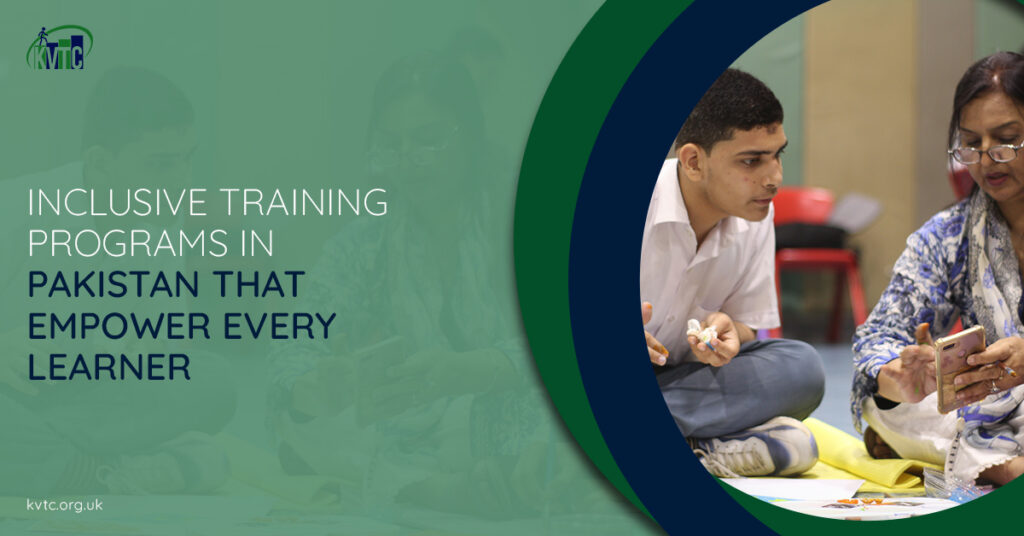
Education in Pakistan is evolving. Learning is no longer limited to classrooms. Training programs are now becoming inclusive, welcoming learners of all abilities.
The centre of this development is the Karachi Vocational Training Centre (KVTC). KVTC is known to be innovative because it enables the quest by individuals that have intellectual and developmental challenges.It has become a national example of what inclusive training can achieve.
Why Inclusivity in Training Matters Now More Than Ever
Pakistan’s population is young and ambitious. Yet many learners with disabilities are excluded due to stigma or lack of facilities.
Inclusive training changes that reality. It provides skills, confidence, and opportunities for independence. Families feel supported, and learners become active members of society.
Such programs are more than education. They restore dignity and build acceptance within communities. When learners thrive, the nation benefits as well.
KVTC in the News
KVTC has created headlines by connecting training with real-world opportunities.
In September 2024, KVTC opened Khudee Bakery and Café. It became Pakistan’s first café run entirely by differently abled staff. The initiative was celebrated by leaders and welcomed by the public as a bold example of inclusion.
Last May 2025 KVTC graduated more than 56 students at the graduation ceremony in Karachi. The event also highlighted para athletes trained by the center. These athletes won 13 gold and 2 silver medals in Japan and Malaysia. Their success proved that KVTC builds not just professionals but champions.
What KVTC Offers
KVTC’s programs focus on growth in every dimension of life.
- Vocational Skills: Training in arts, crafts, computers and technical trades
- Therapies: Speech and occupational therapy for personal development
- Workplace Exposure: Internships and partnerships with businesses for job readiness
- Awareness: Events and exhibitions that challenge social stigma
This complete model gives learners confidence and helps society view ability differently.
Other Institutes Supporting Inclusivity
KVTC is a leader, but many other institutions also support inclusive growth.
Deaf Reach Network
Deaf Reach educates and trains hearing-impaired students. It teaches practical skills like tailoring and IT. Many graduates find jobs or launch small businesses.
TEVTA Punjab
The Technical Education and Vocational Training Authority offers skill-based programs across Punjab. Some programs target disadvantaged groups to promote inclusivity.
STEP Institute of Art, Design and Management
This institute in Lahore trains students in design and media. It encourages inclusivity and diversity in its admissions.
Together, these institutes show that inclusivity is becoming part of Pakistan’s educational landscape.
Impact of Inclusive Training
Inclusive programs create long-lasting effects.
- Employment: Learners secure jobs and reduce dependence on families
- Social Change: Public attitudes shift as success stories gain visibility
- Family Pride: Parents feel hopeful when they see progress and achievement
- Economic Value: More citizens contribute to the country’s growth
These results prove that inclusive training is an investment in human potential.
How Communities Can Help
Every part of society can support inclusivity.
- Raise Awareness: Share KVTC’s success stories online and offline
- Corporate Support: Offer internships, jobs or sponsorships to training centers
- Volunteer Skills: Professionals are able to train, guide or mentor learners
- Policy Advocacy: Push for laws that promote inclusive hiring and education
Inclusivity grows stronger when communities actively participate.
The Future of KVTC and Inclusive Training
The journey of inclusivity in Pakistan has only begun. With technology, the reach of training programs can grow even further.
Digital tools, adaptive devices, and online learning can bring opportunities to remote learners. Social enterprises like Khudee Café can expand to other cities.
Sports and creative industries also hold promise. Para athletes and artists trained at KVTC show how far talent can go with support.
If public and private sectors join hands, Pakistan can build a workforce that reflects its true diversity.
Conclusion
Inclusive training is changing education and workforce in Pakistan and the Karachi Vocational Training Centre (KVTC) is leading this change.
From launching Khudee Café to celebrating medal-winning graduates, KVTC proves that empowerment creates real results. It demonstrates that ability matters more than disability.
The path is a long one with a good direction. As awareness is increased, inclusivity should be the standard across Pakistan. All learners need an opportunity to win.
——————————————————————————————————————————————————
FAQs
-
1. What is assistive technology in special education?
Assistive technology (AT) includes tools like speech devices and reading pens that help students with disabilities learn, communicate, and gain independence effectively.
-
2. How does assistive technology benefit students?
AT boosts learning, enhances communication, promotes independence, and builds confidence, enabling students with special needs to thrive in inclusive classrooms.
-
3. What types of assistive technology are available?
From text-to-speech software and adaptive keyboards to noise-canceling headphones and vocational tools, AT caters to diverse needs, supporting learning and daily tasks.
-
4. How does KVTC use assistive technology?
KVTC empowers students with tools like interactive boards, adaptive devices for IT and cooking, and personalized plans, fostering education and job-ready skills.